


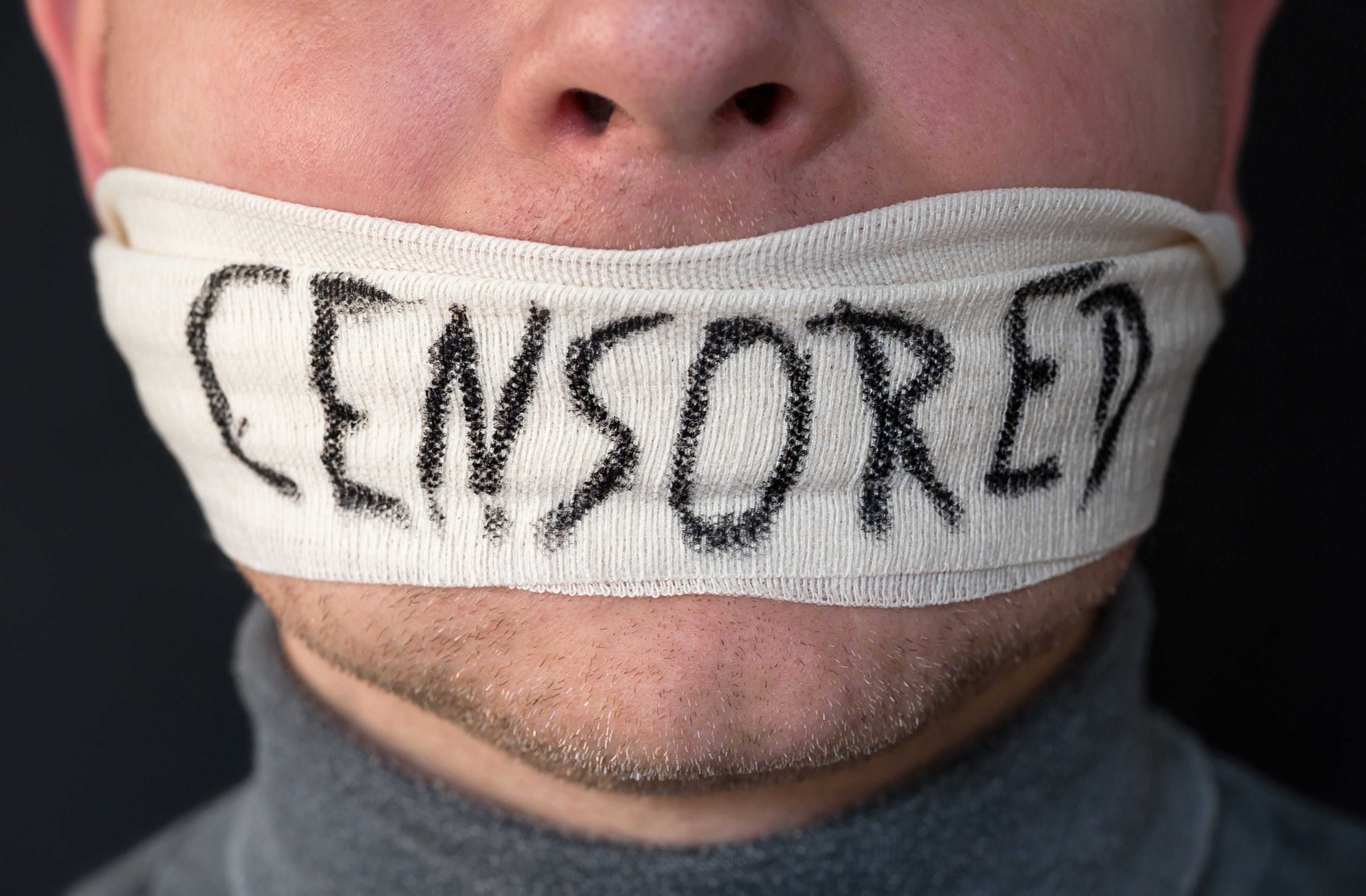
A doctrine has spread through American schools, newsrooms, corporate offices, and universities over the last decade, and once you see it you cannot unsee it. Stated plainly it would sound absurd, which is why no one ever states it plainly. The doctrine holds that every culture and every people on the planet has its share of glories and its share of pathologies worth examining honestly — except one. The descendants of African slaves in the United States, alone among all human groups, possess a culture without flaws. Any disparity, dysfunction, or difficulty observed in this community is, by definition, the residue of white wrongdoing. To suggest otherwise — to suggest that there might be cultural patterns worth interrogating, choices worth reconsidering, habits worth changing — is treated as evidence not of empirical disagreement but of racism, injustice, and white supremacy.
Call the thing by its right name. What we are looking at is a religion: Wokeism. It functions like one, demands faith like one, punishes heretics like one, and — crucially — delivers consequences for the very people it claims to elevate.
The Shape of the New Faith
The Columbia University linguist John McWhorter, who has written about this phenomenon at length in his book Woke Racism, captured the essence of what we are dealing with when he described it as a way of thinking that “requires that you sequester a part of your brain for illogical processing.” Once you adopt that frame, the strange features of contemporary “antiracist” discourse stop being puzzling and become predictable.
Religions have original sin; this one has whiteness. Religions have confession; this one has the ritual acknowledgment of one’s privilege. Religions have sacred texts; this one has Robin DiAngelo’s White Fragility, Ibram X. Kendi’s How to Be an Antiracist, and The 1619 Project. Religions have heretics, who must be expelled lest they corrupt the faithful; this one has the ever-expanding category of those who have been “canceled” (The Choi Report is quickly becoming a heretical enemy). Religions have an eschatology and a theology of atonement; this one promises that the work of antiracism is permanent and never complete, that no one is ever truly absolved.
Joseph Bottum, in An Anxious Age, argued more than a decade ago that progressive moral fervor in America had taken on the shape of the Mainline Protestantism whose decline created a spiritual vacuum. The philosopher John Gray has written that secular ideologies often inherit the structure of the religions they mean to replace. Helen Pluckrose and James Lindsay, in Cynical Theories, traced the academic genealogy from postmodernism through critical race theory to the present consensus. What is new is the particular American iteration this has taken, and the speed with which it captured institutions — universities, newsrooms, HR departments, school boards, professional associations — between roughly 2014 and 2020.
The cleanest tell is what happens when the doctrine collides with evidence. A genuine secular movement updates when its predictions fail. A religion does not. When standardized tests reveal achievement gaps, the new faith does not ask why and how to close them; it declares the tests racist and demands their abolition. When violence rises in schools after disciplinary reforms, the faith does not revisit the reforms; it demands they go further. When Asian Americans outperform white Americans on every metric the doctrine claims is the product of “white supremacy,” the doctrine simply ignores the inconvenience and continues.
The Civil Rights Betrayal
Nothing in the new religion would have been intelligible to the actual leaders of the civil rights movement. Frederick Douglass, addressing the Massachusetts Anti-Slavery Society in 1865, was asked what should be done with the freedmen. His answer was startling and remains so: “Do nothing with us!” He insisted that what Black Americans needed was not paternalism but the removal of barriers — the same opportunities to rise, fall, succeed, and fail that anyone else enjoyed.
61 percent of Nigerian-born Americans aged twenty-five and older hold at least a bachelor’s degree — nearly double the national average and well above the rate for white Americans. Caribbean-born Black Americans have higher household incomes and lower poverty rates than native-born Black Americans. They are visibly Black. They face whatever ambient prejudice exists in American society. And yet their outcomes diverge sharply from the predictions of the doctrine.
—American Community Survey and Migration Policy Institute
Bayard Rustin, the architect of the 1963 March on Washington, wrote in his 1965 Commentary essay “From Protest to Politics” that the civil rights movement had reached a hinge point. The era of moral demonstration was ending; the era of practical coalition-building, policy work, and economic uplift was beginning. He warned that protest as a permanent posture would deteriorate into theater and harm the very people it claimed to serve. Martin Luther King Jr., whose Letter from Birmingham Jail is treated as scripture by the new religion, in fact argued for the substantive content of his “I Have a Dream” speech: that Black Americans should one day be judged by the content of their character, not the color of their skin. The moral premise is precisely the premise the new religion rejects, which has substituted color for character at every turn.
Whitney Young, the head of the Urban League, focused obsessively on jobs, education, and concrete outcomes. He would not have recognized a movement whose lesson to Black Americans is, in effect, a counsel of fatalism. Booker T. Washington and W. E. B. Du Bois disagreed about almost everything, but neither would have endorsed the proposition that Black culture in America has no aspect worth improving.
The Empirical Case Against the New Faith
The most damning thing about the new religion is not that it is illogical — plenty of religions are illogical and survive. It is that, judged by its own stated goal of helping Black Americans, it produces consistent failure and deterioration.
Standardized testing: When school districts have responded to disparities by eliminating tests rather than working to close gaps, the results have not been kind to the students they aimed to help. San Francisco’s Lowell High School, long the city’s flagship public school, replaced its merit-based admissions with a lottery in 2021 in the name of equity. By the end of the first lottery class’s freshman year, the share of students earning at least one D or F grade had risen sharply compared with the previous merit-based class, with the steepest declines reported among the very Black and Hispanic students the policy was meant to benefit. In February 2023, the city’s school board voted to restore merit-based admissions — an unusually rapid acknowledgment of a failed experiment. Across the country, states from Oregon to California have either eliminated or proposed eliminating high school exit exams and grade-level math tracking in the name of equity, with predictable results: students of all races graduate less prepared, and those from disadvantaged backgrounds — who depended most on the structure of standards to demonstrate competence — bear the brunt.
School discipline: In 2014 the Obama administration issued the “Dear Colleague” letter encouraging school districts to reduce racial disparities in suspensions. The premise was Kendian: any disparity must reflect bias. The implementation — especially in cities like St. Paul and Buffalo — pushed districts to suspend fewer students even when behavior would have warranted it. Researchers including Max Eden of the Manhattan Institute documented the consequences: classroom violence rose, teacher assaults increased, and the chief victims were Black students themselves, who in disorderly classrooms found it harder to learn. The federal guidance was rescinded in 2018, but its assumptions still shape policy in many large districts.
Crime & Public Safety: The post-2020 “racial reckoning” coincided with the largest single-year increase in homicide ever recorded by the Centers for Disease Control. Black Americans were not spared; they were disproportionately the victims. Murders of Black Americans rose by roughly 30 percent in 2020, the largest annual increase in the modern record. This is the predictable result of a movement that treats every Black homicide victim of a police officer as paradigmatic and every Black homicide victim of a fellow citizen as invisible. The Harvard economist Roland Fryer’s 2016 study — conducted, he later noted, expecting to confirm bias — found no statistically significant racial bias in officer-involved shootings once the encounter was underway, even as it confirmed disparities in lower-level uses of force. He was vilified for publishing the result. The pattern repeats: empirical findings that complicate the doctrine are not engaged but punished.
The way out is unglamorous. It requires the courage to be called a racist on Twitter/X without flinching, because the alternative is a body of policy that hurts the people the doctrine pretends to help.
Entitlement vs. Achievement. Detroit Public Schools spends among the highest per-pupil amounts in the country. On the 2022 National Assessment of Educational Progress, only about 4 percent of Detroit eighth graders scored proficient or above in math; only about 6 percent in reading. If “systemic racism” in the form of underfunding were the explanation, Detroit should rank among the country’s success stories rather than among its worst-performing districts. The variables that predict student achievement — parental engagement, hours spent on homework, stable households, peer cultures that prize academic seriousness — are precisely the variables the new religion forbids us to discuss.
The Immigrant Problem
The most powerful argument against the totalizing systemic-racism framework is one its adherents cannot answer: the success of Black immigrants. According to American Community Survey and Migration Policy Institute data, roughly 61 percent of Nigerian-born Americans aged twenty-five and older hold at least a bachelor’s degree — nearly double the national average and well above the rate for white Americans. Caribbean-born Black Americans have higher household incomes and lower poverty rates than native-born Black Americans. They are visibly Black. They face whatever ambient prejudice exists in American society. And yet their outcomes diverge sharply from the predictions of the doctrine.
The standard rebuttal — that immigrants self-select for ambition — is true and beside the point. It concedes the very thing the new religion denies: that behavior, choices, and culture matter more than the residue of historical injustice. If a Nigerian immigrant who arrives with little can build a successful life in two decades, the racism in the air cannot be the decisive obstacle the doctrine claims. The doctrine has no good answer to this, which is why it almost never engages it.
The Religion’s Cost to Minorities
Why this should stop is not, in the end, a matter of conservative ideology. It is a matter of arithmetic. McWhorter put it most pointedly when he summarized the doctrine’s premise about Black America: “Our culture has no possible flaws.” The implication of that premise infantilizes far more than it flatters. To insist that one group of human beings is uniquely without agency, uniquely unable to be addressed in the adult language of self-improvement, amounts to a soft and durable bigotry dressed up as respect.
The cost falls hardest on Black Americans themselves. Children who are told that the test is racist do not learn to take the test. Communities told that the police are an existential threat lose the police presence that disproportionately keeps them safe. Students of color admitted to elite universities under standards their classmates do not have to meet experience higher attrition, more academic distress, and the stigma of an asterisk — phenomena documented in Richard Sander’s mismatch research on law-school admissions and in the broader literature on race-conscious admissions. Asian Americans, whose success most embarrasses the doctrine, were actively discriminated against in college admissions for decades, as the Supreme Court’s 2023 decision in Students for Fair Admissions v. Harvard finally established with the school’s own internal data showing the penalty Asian applicants paid on subjective “personal ratings.”
What we are watching, contra the new religion’s framing, is a war between those who believe Black Americans are full adults capable of bearing the same expectations as anyone else and those who, beneath a great deal of warm language, do not.
The Way Out
The way out is unglamorous. It requires defending standardized testing while working to ensure all students are prepared for it. It requires keeping public order while reforming the genuine excesses of policing. It requires honestly discussing the cultural variables that produce achievement, including in our own families and communities. It requires reading Bayard Rustin and Frederick Douglass alongside Kendi and DiAngelo. It requires the courage to be called a racist on Twitter/X without flinching, because the alternative is a body of policy that hurts the people the doctrine pretends to help.
A religion is hard to argue with directly; you cannot reason a person out of a position they did not reason themselves into. But religions do lose their grip when their predictions fail too publicly and too often. Surveys from the Cato Institute and the Foundation for Individual Rights and Expression now show majorities of Americans of every race and political persuasion self-censoring in their daily lives — a sign less of the doctrine’s strength than of its mounting alienation from ordinary intuition. Voters in deep-blue California rejected the restoration of race-based affirmative action by a 57–43 margin in 2020. The pendulum is shifting, slowly and unevenly, because reality is always the most patient critic.
The country owes its Black citizens a great many things — chief among them the simple respect of treating them as full participants in the human story, with cultures that, like every culture, contain greatness and contain failings worth examining. To withhold that respect in the name of racial justice is the most curious form of racism yet invented. We should stop calling it justice. We should call it what it is: a religion, and not a good one.